---
title: "How Usernames and Passwords Got so Complicated"
description: "Explore the complexities of authentication and how to solve them on this stream from .NET Conf 2019."
authors:
- name: "Ramiro Nunez Dosio"
url: "https://auth0.com/blog/authors/ramiro-nunez-dosio/"
date: "Oct 14, 2019"
category: "Developers,Deep Dive,Username & Password"
tags: ["username", "password", "net", "dotnetconf", "authentication", "authorization", "login", "web-app"]
url: "https://auth0.com/blog/how-username-password-got-so-complicated-dotnetconf-2019/"
---
# How Usernames and Passwords Got so Complicated
.NET Conf 2019 was an exciting and unique event that took place this year from September 23 — 25. It is a free, 3-day virtual conference co-organized by the .NET community and Microsoft. Anyone with an Internet connection was able to attend.
## .NET Conf 2019: A Virtual Conference
This year the conference saw the [launch of .NET Core 3.0](https://auth0.com/blog/exploring-dotnet-core-3-whats-new/), offered prizes to attendees such as free Xbox One X consoles, and hosted talks from a world-class lineup of speakers from Microsoft and the community.
Our own [Developer Advocate Engineer Bobby Johnson](https://auth0.com/blog/authors/bobby-johnson/) gave a talk focused on exploring how the username-password strategy got so complicated over time. Bobby shows you how overwhelming it can be to take your first step beyond username and password-based authentication strategies, which are the default authentication strategies offered by most full-stack web application frameworks.
Social logins, Identity Providers, OAuth 2.0, LDAP, SAML, OpenId Connect; all can be confusing. What does it all mean? How did we get here? Watch Bobby's talk to find out:
The organizers have made all the sessions available [on-demand on YouTube](https://www.youtube.com/user/VisualStudio). Be sure to check them out.
## More Resources
- [.NET Conf 2019 Official Site](https://www.dotnetconf.net/)
- [Bobby's Twitch Channel](https://www.twitch.tv/iamnotmyself/): Streams three times per week!
- [The Live Coders' Twitch Channel](https://livecoders.dev/): Enthusiastic streaming developer community with members who participated in .NET Conf 2019 as organizers or attendees.
- [Exploring .NET Core 3.0. What's New?](https://auth0.com/blog/exploring-dotnet-core-3-whats-new/)
- [Building and Securing Web APIs with ASP.NET Core 3.0](https://auth0.com/blog/how-to-build-and-secure-web-apis-with-aspnet-core-3)
## Aside: Securing ASP.NET Core 3.0 with Auth0
Authentication and authorization are hard but securing ASP.NET Core 3.0 applications with Auth0 is easy and brings a lot of great features to the table. With [Auth0](https://auth0.com/), you only have to write a few lines of code to get solid [identity management solution](https://auth0.com/user-management), [single sign-on](https://auth0.com/docs/sso/single-sign-on), support for [social identity providers (like Facebook, GitHub, Twitter, etc.)](https://auth0.com/docs/identityproviders), and support for [enterprise identity providers (like Active Directory, LDAP, SAML, custom, etc.)](https://auth0.com/enterprise).
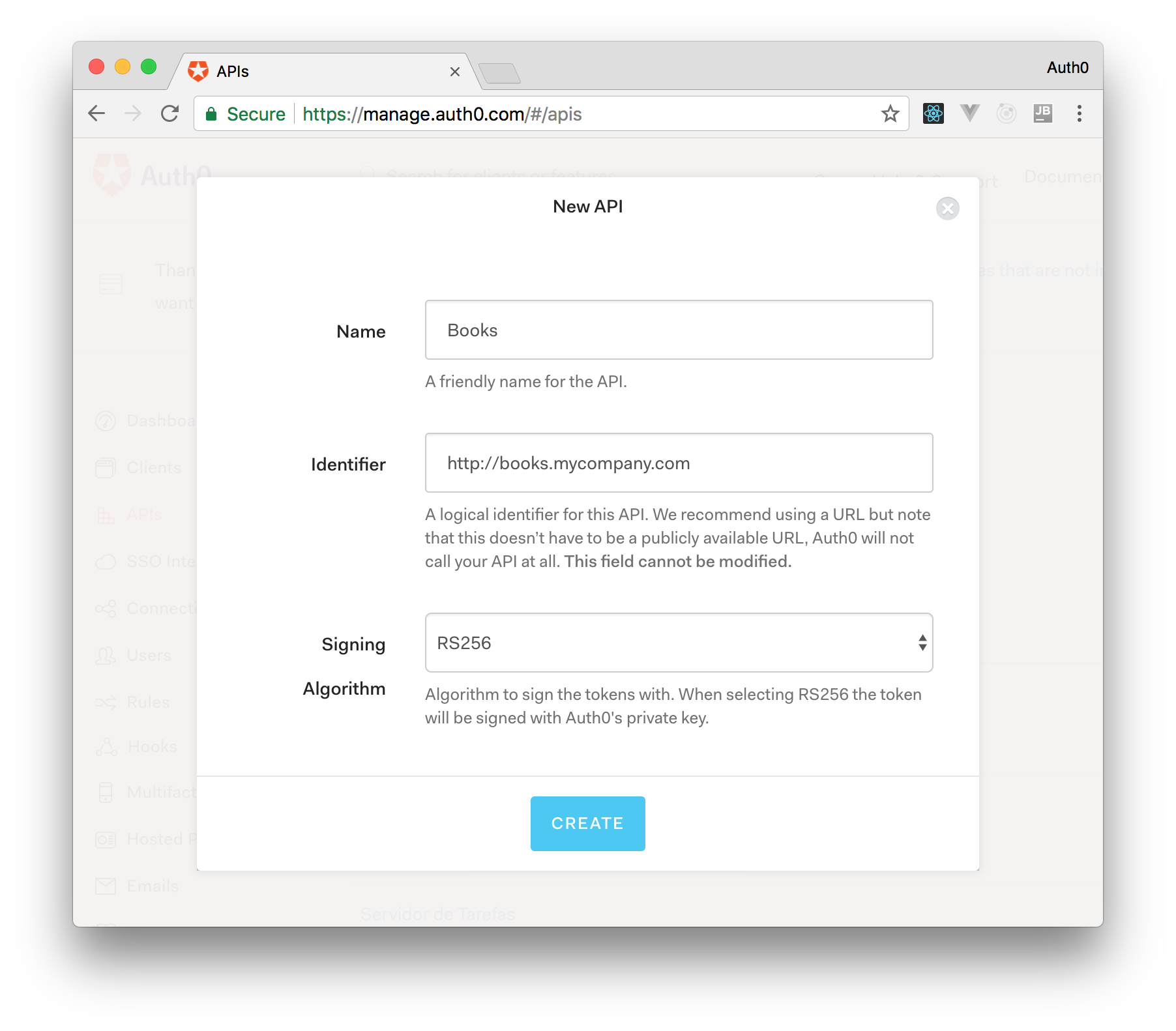
On ASP.NET Core 3.0, you need [to create an API in your Auth0 Management Dashboard](https://auth0.com/docs/apis) and change two things on your code. To create an API, you need to sign up for a free Auth0 account. After that, you need to go to [the API section of the dashboard](https://manage.auth0.com/#/apis) and click on "Create API". On the dialog shown, you can set the _Name_ of our API as "Books", the _Identifier_ as "http://books.mycompany.com", and leave the _Signing Algorithm_ as "RS256".
After that, you have to add the call to `services.AddAuthentication` in the `ConfigureServices` method of `Startup`:
```csharp
string domain = $"https://{Configuration["Auth0:Domain"]}/";
services.AddAuthentication(options =>
{
options.DefaultAuthenticateScheme = JwtBearerDefaults.AuthenticationScheme;
options.DefaultChallengeScheme = JwtBearerDefaults.AuthenticationScheme;
}).AddJwtBearer(options =>
{
options.Authority = domain;
options.Audience = Configuration["Auth0:Audience"];
});
```
You also need to add an invocation to `app.UseAuthentication()` in the body of `Configure()` method of `Startup`.
And add the following element to `appsettings.json`:
```json
{
"Logging": {
// ...
},
"Auth0": {
"Domain": "bk-samples.auth0.com",
"Audience": "http://books.mycompany.com"
}
}
```
> **Note** that the domain, in this case, **has to be changed** to the domain that you specified when creating your Auth0 account.