

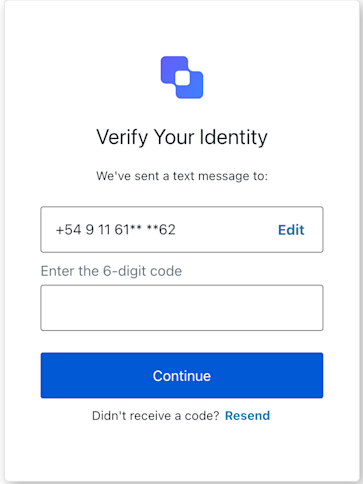
login-passwordless-sms-otp screen functionality. This screen collects the user’s phone number and code.
Constructors
Create an instance of LoginPasswordlessSmsOtp screen manager:Example
Properties
Provides branding-related configurations, such as branding theme and settings.
Provides client-related configurations, such as
id, name, and logoUrl, for the login-passwordless-sms-otp screen.Provides country code data for phone number entry, such as
available and recommended, for the login-passwordless-sms-otp screen.The active Experiment Center experiment for this screen, or
null when no experiment is active (or the screen has not opted in via context_configuration).Provides information about the user’s Organization, such as
id and name.Contains data about the current prompt in the authentication flow.
Contains details specific to the
login-passwordless-sms-otp screen, including its configuration and context.Contains data related to the tenant, such as
id and associated metadata.Provides transaction-specific data for the
login-passwordless-sms-otp screen, such as active identifiers and flow states.Handles untrusted data passed to the SDK, such as user input during login.
Details of the active user, including
username, email, and roles.Methods
This method changes the display language of the Universal Login page.Method Parameters
Example
Error[]
This method retrieves the array of transaction errors from the context, or an empty array if none exist. An array of error objects from the transaction context.
Returns a Method Parameters
ResendControl object that manages resending with a cooldown. The startResend() method of the object triggers the resend and starts a cooldown period before the user can resend again. The countdown persists across the page reload that a resend causes.Example
Resends the one-time password (OTP) to the user’s phone number.This method submits a form to Auth0. Auth0 renders this screen again. If a captcha is required, Auth0 sends the user back to the
login-id screen instead, or to the signup-id screen if the user started from signup. In both cases, the browser loads a new page and the JavaScript context, including component state and timers, is lost.When you call resendOTP(), keep the following in mind:- Code that runs after
await resendOTP()can’t rely on state that the code sets, such as a “code sent” message or a countdown. - If Auth0 can’t send the SMS, for example because of a rate limit, Auth0 renders this screen again without an error. Only extensibility errors, such as an error from an Action, and unexpected failures appear in
transaction.errorsafter the page reloads. The returned promise doesn’t reject. - The returned promise resolves when the form is submitted, before the new page loads. The promise doesn’t confirm that Auth0 sent a new code.
resendManager(). The resendManager() method stores the countdown in localStorage, so the countdown persists across the page reload.Example