

McKinsey estimates that, by 2030:
- $3-5 trillion US dollars will flow through agentic commerce, globally.
- Roughly 25-40% of all e-commerce will be agentic.
Europe’s brands are keen to make this vision a reality. According to the 2026 Customer Identity Trends Report, featuring global surveys of developers, senior leaders and consumers commissioned by Okta, more than three-quarters of European developers and senior leaders polled (75.8%) reported that their organization either already has AI agents or autonomous systems fully embedded in production today (28.7%) or is actively building them (47.0%).
At the same time, only 40% of European consumers are ready for AI to take on final decisions and take action on their behalf (7%) or to handle routine tasks and relatively less important decisions (33%) today.
However, attitudes are shifting: 40% of European consumers reported that they feel more comfortable with AI acting on their behalf today compared to a year ago.
Key Takeaways
- More than three-quarters of European brands are rolling out AI agents or autonomous systems, but only 17.5% are meeting project timelines,
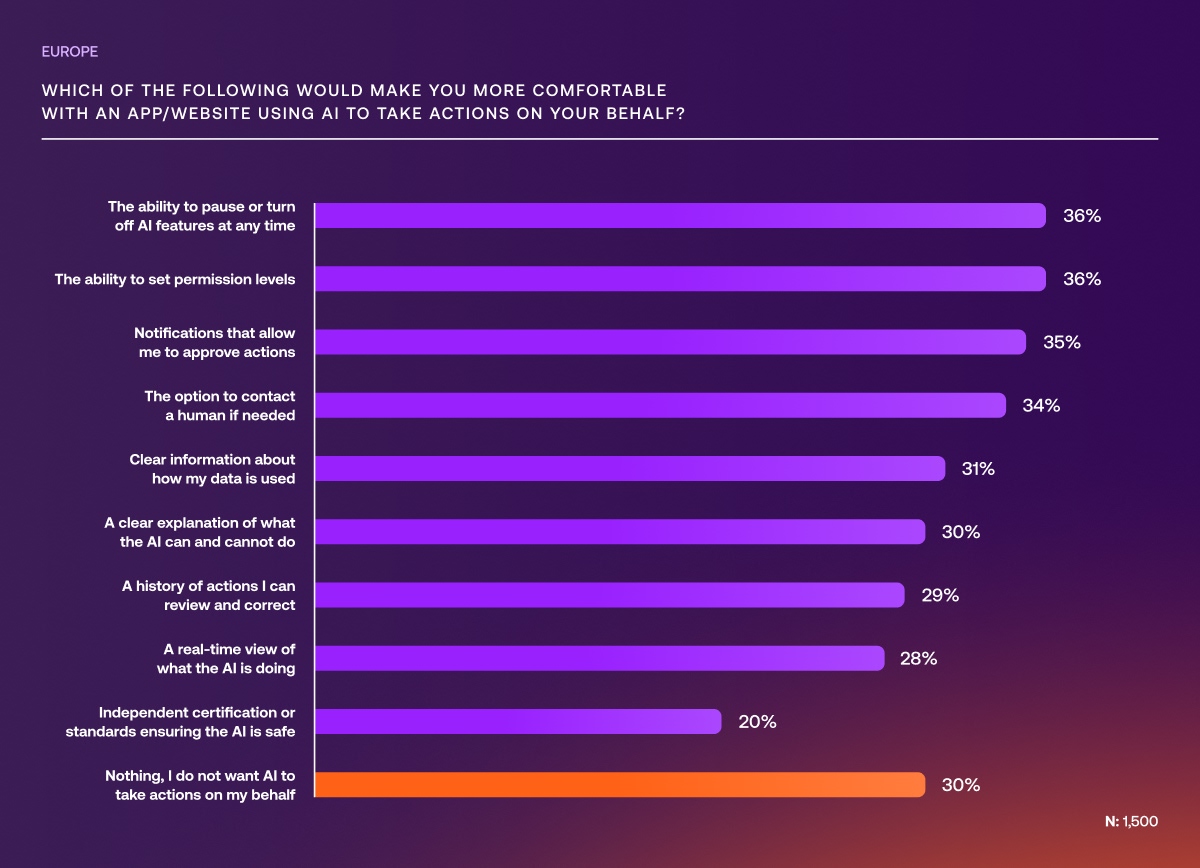
- Consumers are willing to trust AI, but only when there are clear limits on autonomy Control, transparency, and time can close the trust gap—but no single measure addresses the concerns of the majority of consumers.
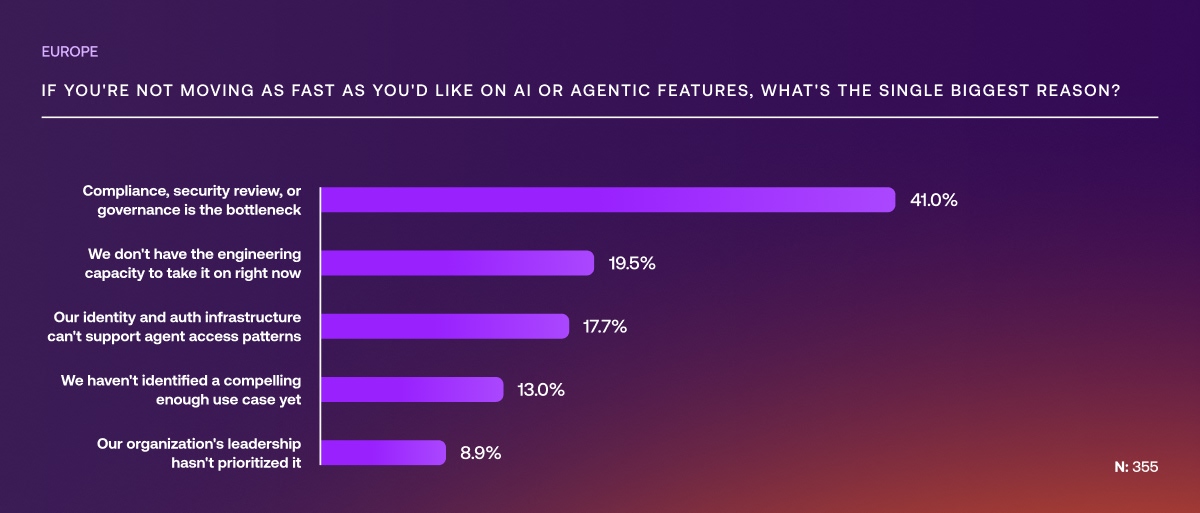
- European developers and senior leaders routinely cite outdated identity systems and related challenges as reasons for falling behind on AI deployments.
- Organizations need identity platforms engineered to meet the authentication, authorization, and audit needs of AI agents and autonomous systems.
Control and Transparency Are Key, but There’s No Single Way to Build Trust
For brands intent on rolling out AI agents and autonomous capabilities, the success of these initiatives will largely depend on building trust and equipping consumers with clear, usable controls as the scope of AI actions expands.
However, European consumers form a diverse population, and what works to address one person’s concerns might not work for another. This simple, but important insight points to the need for identity platforms engineered to meet the authentication, authorization, and audit needs of AI agents and autonomous systems—and the consumers using them.
Outdated Identity Infrastructure Is Slowing Europe’s AI Rollouts
- Key Stats: 17.5% — European organizations delivering AI at the speed they want.
Out of the more than three-quarters of European organizations actively building AI agents or autonomous systems, only 17.5% are actually delivering at the speed they want. When asked to identify the single biggest reason for the delays, the top three reasons cited by developers and senior leaders all relate directly or indirectly to customer identity.
The third most-frequently cited reason, identity infrastructure that can’t support agent access patterns, is self-explanatory: either your customer identity infrastructure can power AI services or it can’t.
Fortunately, upgrading to a modern identity provider doesn’t just address this issue, but also the two that were cited even more frequently, by coming equipped with:
- Security and auditability features that make it easy to meet obligations,
- Authentication and authorization capabilities — and agentic identity features in particular—that save developers time and effort.
Customer Identity Should Help European Brands, Not Hold Them Back
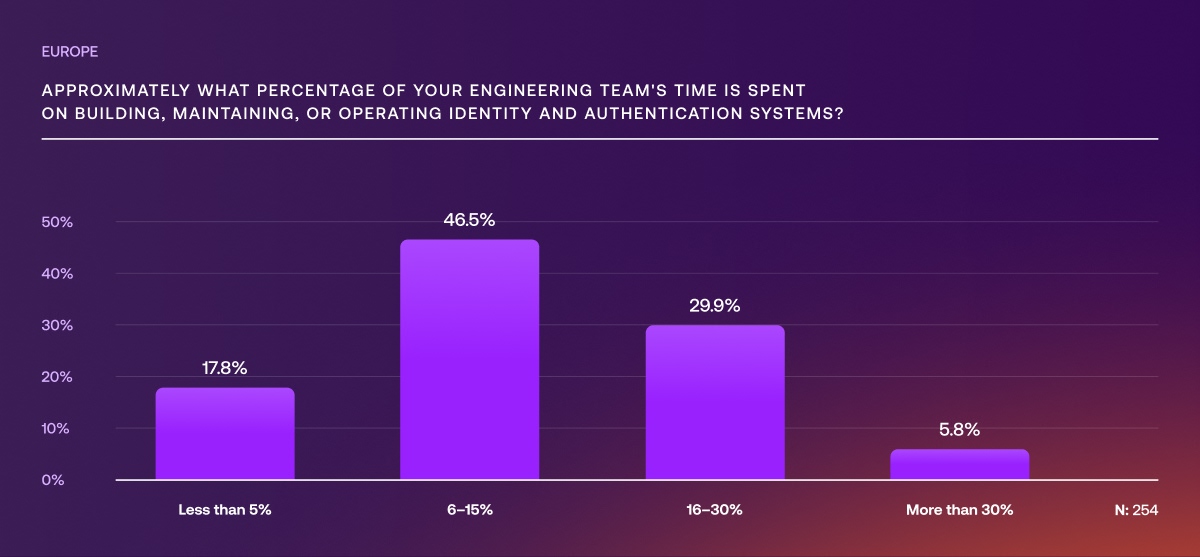
- Key Stats: ~14% — Engineering time spent on CIAM.
On average, devs and senior leaders from European organizations report that nearly 14% of their engineering team’s time is spent building, maintaining, or operating customer identity and access management (CIAM). For that level of investment, brands should get more than bottlenecks that slow down innovation.
A modern CIAM platform accelerates delivery with time-saving out-of-the-box features that address:
- Delegated access (e.g., Auth for MCP)
- Context security (e.g., FGA for RAG)
- Interoperability (e.g., Agent as Principal)
Crucially, capabilities including fine-grained authorization, audit trails, and identity verification for agent actions help to meet the strict requirements of regulations like GDPR and the EU AI Act.
Unresolved identity friction is actively leaking revenue and creating new challenges for businesses deploying AI agents, where trust and control are critical. Read the 2026 Customer Identity Trends Report to explore how modernizing customer identity helps organizations deliver convenience without compromising security, reducing the friction that slows growth today while enabling the trust and control needed for AI-powered experiences.
Unless otherwise cited,all data in this brief comes from the surveys commissioned for the 2026 Customer Identity Trends Report. European data represents individuals surveyed in Germany and the UK.