For years, the sign of a "productive" design team was constant motion. We were a whirlwind of new mockups, sprawling design files, and meticulously detailed spec documents. This work was essential, but it was also a bottleneck. It was a state of productive inefficiency. We were certainly busy, but a backlog of over 350 "polish" tickets, some aging for more than a year, told us we were not making our biggest possible impact. This was no't a design problem; it was a system problem.
AI has finally given us an exit. These tools are not a threat to our craft. Instead, they are a liberation from its most demanding and repetitive parts. We realized that the most powerful move we could make was to consciously trade our old tasks for new, more impactful ones.
By making this move, we unlocked the capacity to lead in ways that were previously out of reach.The strategic capacities we gained include guarding the entire user experience, architecting quality systems, and directly solving long-standing product debt.
The Tasks We Shed
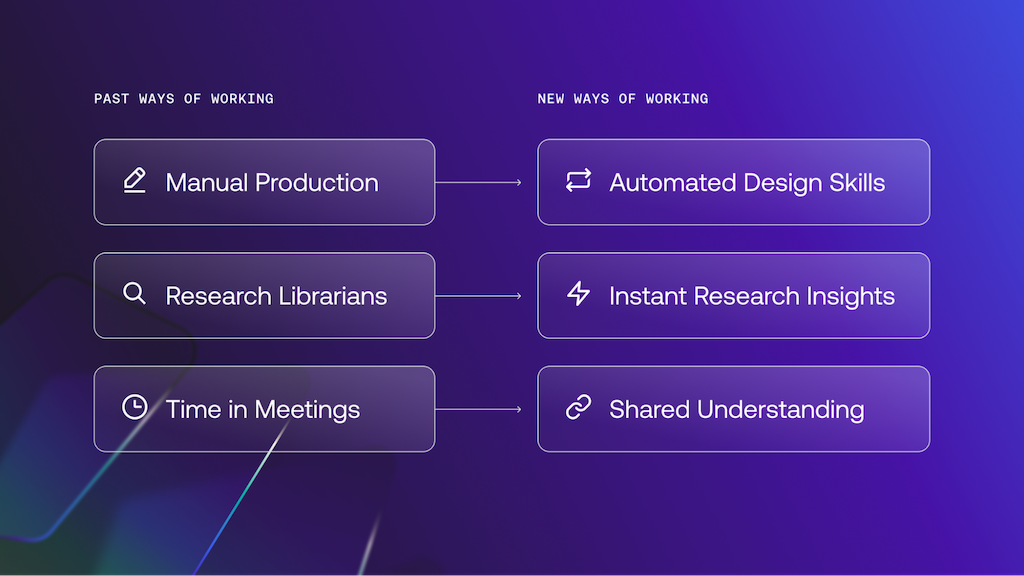
1. We stopped manually producing every screen and creating exhaustive design specs
Not long ago, our designers spent their days crafting endless screens for every possible state and scenario and following up with a ritual of creating a mountain of redline documents for handoff. Both of these manual creation and documentation tasks were low-leverage activities and notorious sources of friction.
With smart design systems and AI tools that generate quality UI in seconds, and by empowering our designers to contribute directly to the front-end code for minor fixes, we have made the design-to-engineering translation layer obsolete. Our shared design system is the spec. By automating the factory work and removing this major hurdle, our team was freed to become a true strategic partner and dramatically increased our development velocity.
2. We stopped acting as research librarians
Every new project used to begin with a monumental task: hunting down and piecing together past research, user interviews, and support tickets. Today, AI-powered knowledge tools instantly surface insights from years of data. Research is no longer a bottleneck. We now start projects with a foundation of knowledge, allowing us to use precious customer conversation time to validate bold ideas and uncover new opportunities.
3. We stopped attending non-essential meetings
The constant barrage of status meetings and check-ins consumed valuable design time. To reclaim focus, our team implemented a no meeting mandate unless the meeting directly impacted a current, high-priority project. We replaced frequent, low-value syncs with asynchronous updates, ensuring clarity and velocity without sacrificing deep work time.
The Strategic Contributions We Gained
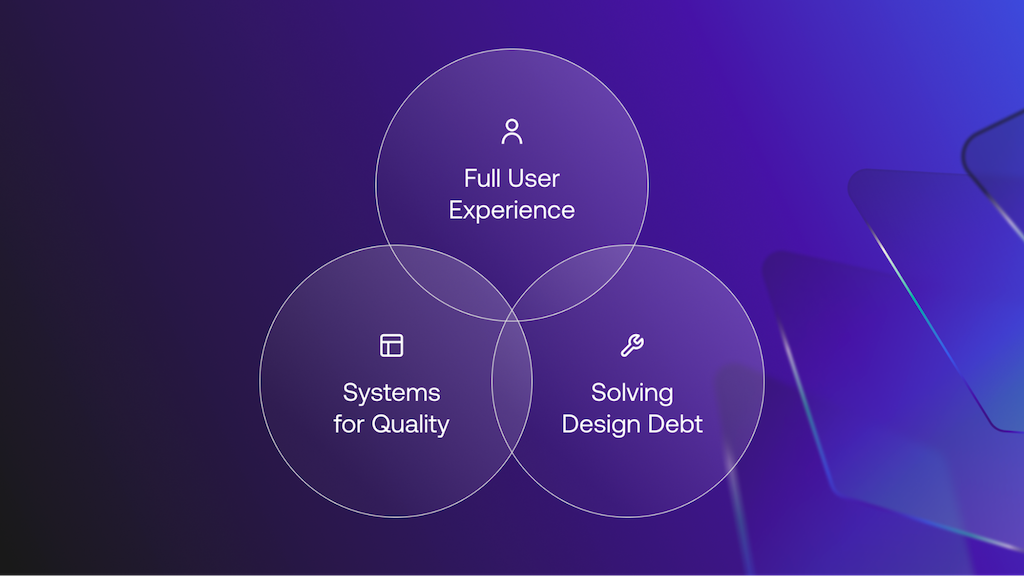
1. We started guarding the entire user experience
With time freed from perfecting pixels, we lifted our gaze to the entire customer journey. The UI is just one piece of the puzzle. Our new mission is to design and set the quality bar for every touchpoint. We now ask bigger questions “Can this error message be avoided entirely? Is our documentation a joy to use?" This holistic view creates a seamless, high-quality experience that builds deep customer loyalty and makes our product feel like it was built by a single, caring team.
2. We started building the systems for quality
In a world where anyone can generate a UI, the design team’s purpose becomes even clearer. Our job is to be the architect of the quality system itself. Instead of being the "polish police" at the end of a project, we now build the infrastructure that empowers the entire organization to ship excellent work. This means defining what good looks like, creating the tools to measure it, and building scalable systems that make quality the path of least resistance for everyone. Instead of inspecting every car that rolls off the assembly line, our job is now to design the assembly line itself.
3. We started solving problems directly
The most energizing shift has been our move from documenting problems to actively solving them. Our team recently rallied to burndown a backlog of over 350 polish debt tickets that were creating daily friction for our users. Instead of writing more tickets, our designers were empowered to jump into the codebase and fix them. This simple change was revolutionary. It erased a mountain of engineering debt and gave our team a powerful sense of ownership and purpose.
Design's New Purpose
The story of a modern design team is a story of a great exchange. We traded the comfort of manual production for the power of strategic ownership. Design as we once knew it is fundamentally changing, moving beyond mere execution into the realm of systemic influence. The result is a team that is not just a service, but a driving force for quality and velocity.
The most valuable question you can ask your team on Monday is not 'What are you making?' but 'What can you stop making to start leading?' Challenge them to identify one low-impact task they can shed, and watch what new leadership they pick up in its place. By empowering your team to let go of legacy tasks, you unlock their true potential. You enable them to become what they were always meant to be: your most valuable problem solvers and your engine for innovation.
About the author

Jourdan Nyhof
Senior Product Design Manager