
TL;DR: Token Vault with Organizations Support maintains separate, org-scoped token records for each user, powering integrations and AI agents that act within organizational boundaries without sacrificing data isolation. Credential isolation is guaranteed by architecture, not by policy.
Your enterprise customers need AI agents that act on behalf of their users across their entire SaaS stack — automating workflows in Slack, syncing data to Salesforce, coordinating tasks in Google Workspace. To do that, those agents need secure, scoped access to the tools their users already work in.
If you are building B2B SaaS on Auth0 using Organizations, you have already solved multi-tenancy. Now comes the harder part: your customers are asking for third-party integrations that respect the same organizational boundaries you have built.
Token Vault with Organizations Support makes this possible. By maintaining separate, org-scoped token records for each user, you can power integrations and AI agents that act within organizational boundaries — without sacrificing data isolation. This credential isolation, guaranteed by structural boundaries, matters for three primary reasons.
1. Build The Integrations Your Customers Have Been Asking For
Enterprise customers will not buy your platform unless it integrates with their existing tools. Companies that build these integrations keep their biggest clients and win more deals. Companies that do not lose to competitors.
Integrations are not a nice-to-have feature — they are required for enterprises to actually use your product. Your agents can now act on behalf of users across Slack, Salesforce, Google Workspace, GitHub, and the rest of their stack, inside the organizational boundaries those enterprises demand.
2. Give Security and Compliance a Reason To Say Yes
Multi-tenant architecture has one non-negotiable guarantee: each customer's data stays in its own silo, with no cross-org leakage and no unexpected token sharing. Because Token Vault maintains separate token records per organization, credentials never leak between organizations and permissions never bleed across boundaries.
Credential isolation is guaranteed by architecture, not by policy. That is the difference between a security team that approves your deployment and one that blocks it. When isolation is structural, every token scoped, every boundary explicit, every exchange auditable, the biggest objection that stalls enterprise rollouts is removed.
3. Let Your Power Users Work The Way They Actually Work
Consultants, auditors, and managed service providers live across multiple client accounts. Previously, switching between organizations meant being prompted to reconnect the same third-party account over and over — same platform, same user, same account, but a broken experience every time they changed context.
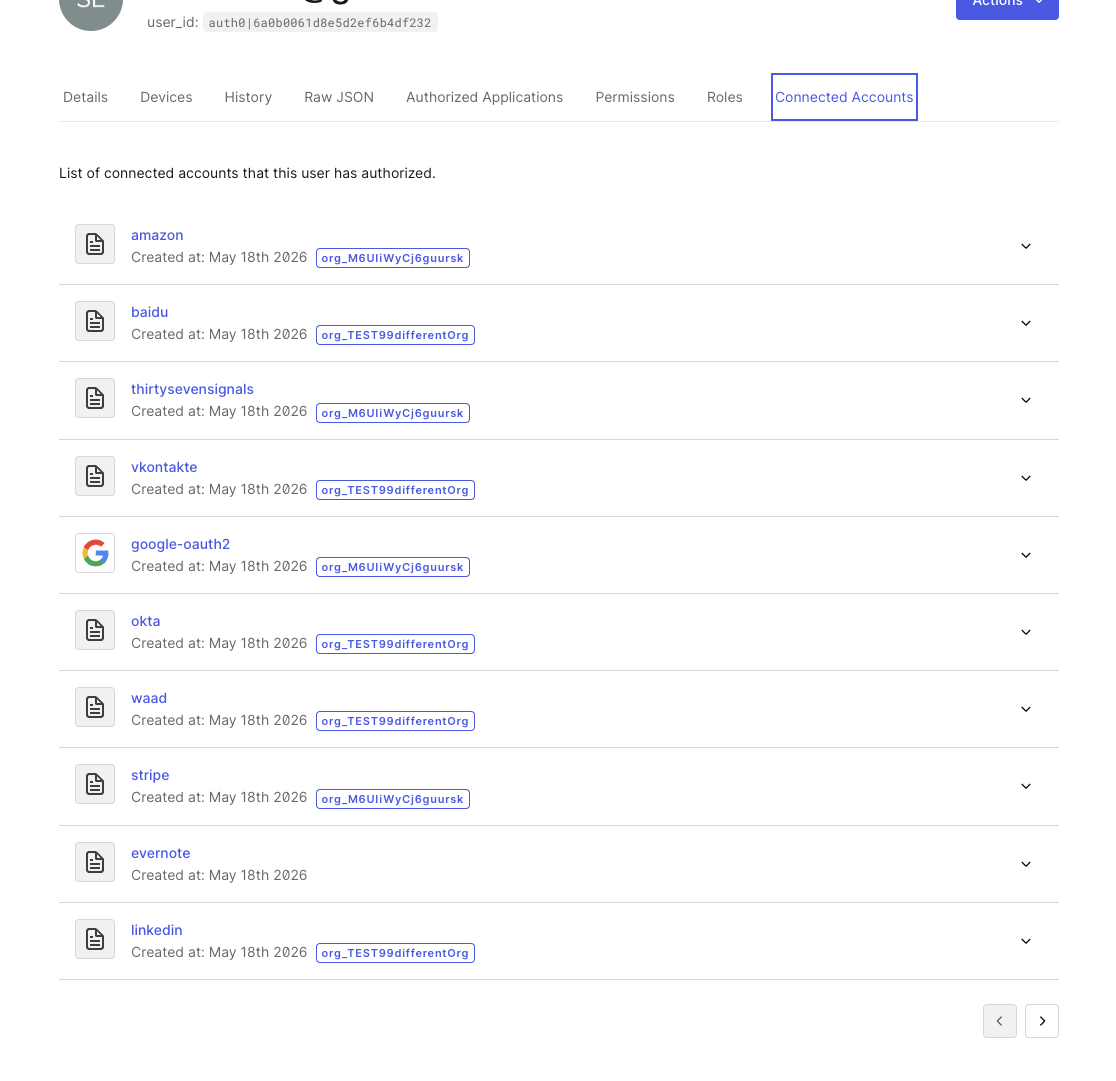
Now, Token Vault maintains separate token records per organization with clear, predictable behavior. Users connect once per org, and the platform handles the rest.
These are your highest-value, most active users. Friction here can erode trust in your platform's reliability. Removing it means your most engaged customers stay engaged, and your platform feels like modern software built for how they actually work.
How Token Vault with Organizations Support Works
The Architecture:
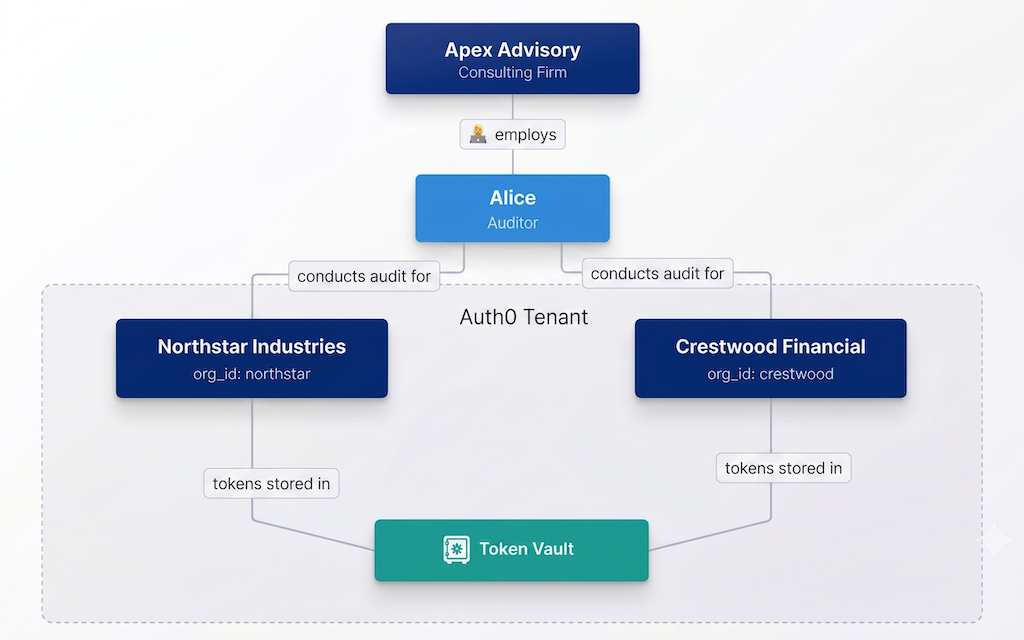
Token Vault respects organizational boundaries while maintaining strict data isolation. Here is the flow:
- User connects a third-party account (for example, Google Drive) while working in Organization A.
- Token Vault stores the refresh token scoped to Organization A's
org_id. - User switches to Organization B and needs the same integration.
- Platform prompts user to connect once per org context — a one-time setup per organization.
- Agents and workflows execute securely within their org boundary, with full token lifecycle management (refresh, rotation, revocation).
The result: Your platform offers enterprise-grade connected accounts without architectural compromise.
Getting Started with Token Vault with Organizations Support
- Ensure your Auth0 tenant has Organizations enabled.
- Update your Connected Account flow to use Token Vault with org-scoped contexts.
- Test token exchanges within a single organization first — then validate cross-org isolation.
- No additional configuration needed, org segregation is the default behavior.
The Value of Multi-Tenant Integration Ecosystems
The enterprise platforms winning right now are not choosing between scale and security. They are building platforms that deliver both seamlessly.
Token Vault with Organizations Support removes the architectural complexity that previously required workarounds. You can now build third-party integrations for your most complex, organizationally diverse customers without sacrificing the data isolation they demand.